Last updated: September 29, 2026
Water Damage Restoration Timeline: Complete Guide to Costs & DIY Mistakes
Water damage is one of the most common and costly emergencies homeowners face. Whether from burst pipes, flooding, leaks, or natural disasters, understanding the water damage restoration guide fundamentals can mean the difference between a manageable recovery and catastrophic loss. This comprehensive water damage restoration guide covers everything you need to know from immediate response steps to professional restoration costs and critical mistakes that could worsen your situation.
In this guide, we’ll walk you through the complete water damage restoration process, explain realistic timelines, break down restoration costs, and identify common DIY pitfalls that could compromise your home’s structural integrity and your health.
Understanding Water Damage Restoration: What It Really Means
Water damage restoration is more than simply mopping up water and drying carpets. It’s a multifaceted process involving assessment, water extraction, dehumidification, sanitization, and reconstruction. The restoration process addresses visible damage while also tackling hidden moisture that can lead to mold growth, structural decay, and long-term health hazards.
Professional restoration specialists use specialized equipment and industry protocols to restore your property to its pre-loss condition. This isn’t a job where shortcuts save money. They can result in significantly higher remediation costs later.
Why Professional Assessment Matters First
Before any restoration begins, professionals conduct a thorough assessment using moisture detection equipment and structural analysis. This determines the extent of damage, category classification (clean water, gray water, or black water), and the appropriate restoration approach. Choosing the right expert for your mold and water remediation project ensures this critical assessment happens correctly from the start.
Water Damage Restoration Timeline: What to Expect
Understanding the water damage restoration timeline helps you plan finances, living arrangements, and expectations. The actual duration depends on damage severity, water source, and affected materials but here’s the typical breakdown:
Hours 0-24: Emergency Response Phase
The first 24 hours are critical. Water must be extracted immediately to prevent mold growth, which can begin within 24-48 hours of exposure. Emergency teams will remove standing water, assess damage extent, and begin preliminary drying with industrial equipment.
This is when you should take immediate steps after water damage occurs. Document the damage with photos, turn off electricity if it is safe to do so, and ensure your family’s safety before professionals arrive.
Days 1-7: Water Extraction and Initial Drying
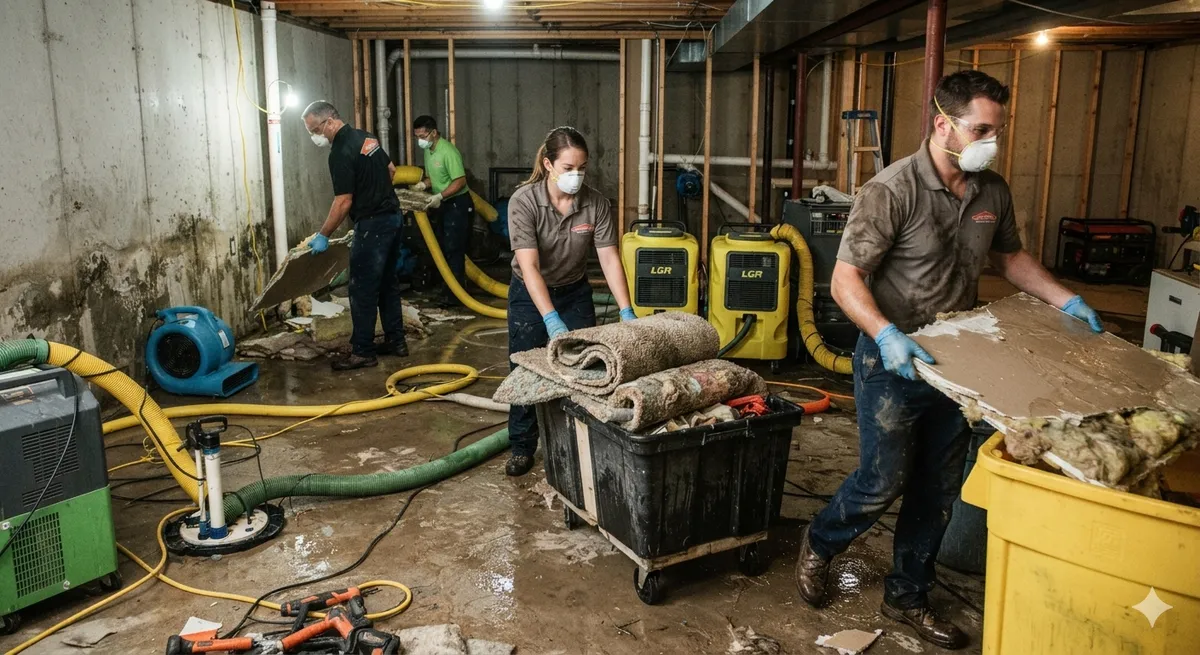
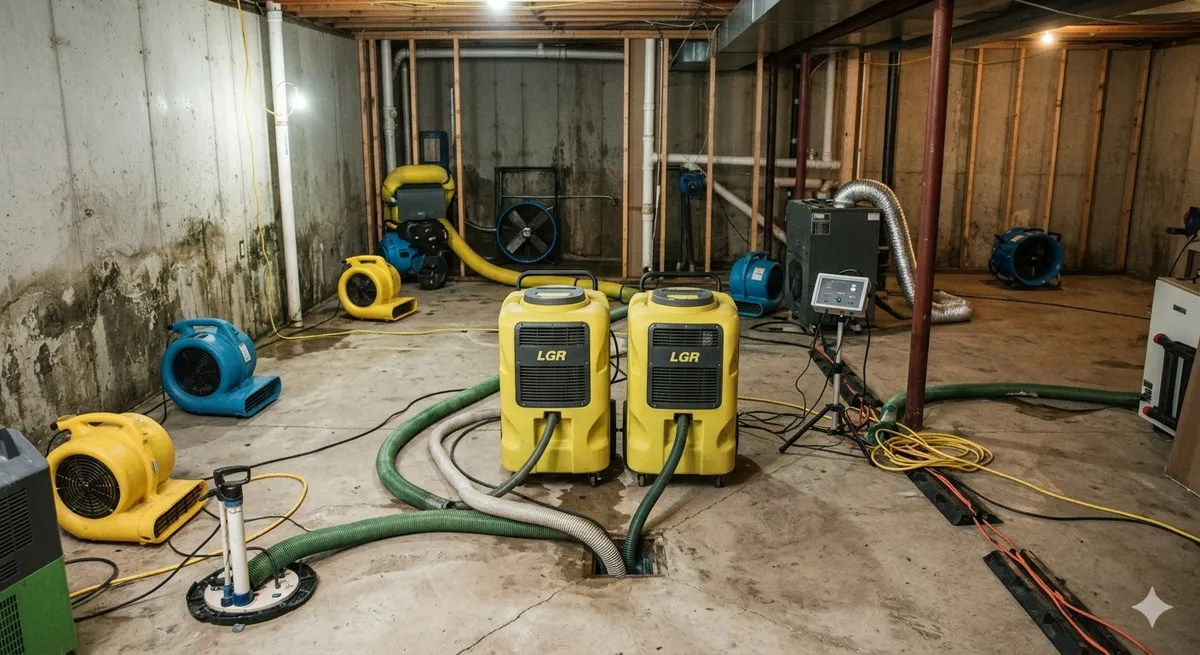
Professional crews deploy dehumidifiers, air movers, and moisture detection equipment. They’ll remove damaged materials that can’t be restored, including wet drywall, insulation, and flooring, and begin the drying phase. Moisture monitoring happens daily.
Days 7-14: Dehumidification and Monitoring
Even after visible water is gone, moisture remains trapped in walls, subflooring, and structural elements. Dehumidifiers continue running while technicians monitor moisture levels. This prevents mold and ensures structural integrity.
Weeks 2-4: Reconstruction and Restoration
Once moisture levels stabilize, reconstruction begins. New drywall installation, flooring replacement, painting, and fixture reinstallation happen during this phase. Timeline varies based on damage scope.
For major flooding or structural damage, restoration can extend 4-8 weeks or longer. The timeline for complete restoration varies depending on the extent of damage, materials affected, drying requirements, and the scope of reconstruction.
Water Damage Restoration Cost Breakdown
Water damage restoration costs range dramatically based on damage severity, property size, and materials affected. Here’s a realistic breakdown to help you understand potential expenses:
Minor Water Damage (1-10% of property)
- Water extraction: $300-$800
- Drying and dehumidification: $500-$1,500
- Minor material replacement: $500-$2,000
- Typical total: $1,300-$4,300
Moderate Water Damage (10-25% of property)
- Water extraction and removal: $1,000-$3,000
- Drying equipment rental and operation: $1,500-$4,000
- Material removal and replacement: $3,000-$8,000
- Possible mold remediation: $1,000-$3,000
- Typical total: $6,500-$18,000
Severe Water Damage (25%+ of property)
- Complete water extraction: $3,000-$10,000+
- Extended drying operations: $4,000-$12,000+
- Structural repairs and reconstruction: $10,000-$50,000+
- Mold remediation and testing: $2,000-$8,000+
- Typical total: $19,000-$80,000+
Most homeowners’ insurance policies cover water damage from sudden, accidental events (like burst pipes). However, gradual leaks, flooding, and maintenance failures typically aren’t covered. Check your specific policy before assuming coverage.
Factors Affecting Emergency Water Damage Repair Costs
Several variables influence final costs. Water source matters significantly. Clean water generally requires less specialized handling than black water contamination, which may require additional safety and remediation procedures. The longer water sits before extraction, the more secondary damage occurs, increasing costs. Material types matter too; hardwood flooring costs more to restore than vinyl, and finished basements cost more than unfinished spaces.
Mold development dramatically increases costs. What starts as a $5,000 water damage restoration can become a $25,000 project if mold isn’t addressed properly in the initial drying phase. This is why hiring professional mold and water remediation services offers significant advantages over DIY attempts.
Critical DIY Mistakes That Cost Thousands More
The desire to save money by handling water damage yourself is understandable but often backfires. Here are the most expensive DIY mistakes:
Mistake #1: Incomplete Water Extraction
Homeowners often assume wet surfaces are dry once they feel dry to the touch. However, moisture hidden inside walls, under flooring, and in insulation remains for weeks. Without professional-grade moisture meters and dehumidification, this hidden moisture causes mold, structural rot, and permanent odors.
Mistake #2: Improper Mold Prevention
Mold begins growing within 24-48 hours of water exposure. Simply opening windows and using household fans cannot eliminate moisture fast enough. Professional dehumidifiers and HEPA filtration are essential. Failing this step adds $5,000-$15,000 in future mold remediation costs.
Mistake #3: Discarding Restorable Materials
Professionals know which materials can be salvaged with proper cleaning and drying. Homeowners often unnecessarily throw out furniture, documents, and fixtures that restoration experts could recover. This represents both financial loss and emotional loss for irreplaceable items.
Mistake #4: Skipping Professional Assessment
Without proper assessment, hidden damage goes unaddressed. Compromised structural integrity, contaminated water systems, and electrical hazards might not surface until months later, requiring expensive emergency repairs.
Mistake #5: Inadequate Safety Precautions
Water damage may involve electrical hazards, mold exposure, and contaminated water. DIY approaches expose your family to these risks without proper protective equipment or training. Professional teams carry liability insurance and follow OSHA safety protocols.
Professional Water Damage Restoration Services: What You Get
Professional restoration companies bring expertise, equipment, and accountability that DIY cannot match. They arrive with industrial pumps, dehumidifiers, moisture meters, HEPA air filtration, and protective equipment.
More importantly, they understand the restoration process from emergency response through reconstruction. They coordinate with your insurance company, manage documentation for claims, and guarantee their work. If problems develop later, professional companies typically warranty their restoration for 1-5 years.
Your Next Steps: Professional Help Awaits
Water damage demands immediate action. Every hour of delay can increase the potential for additional damage and health concerns. Whether you’re dealing with burst pipes, basement flooding, or storm damage, professional assessment can help identify hidden moisture, determine the appropriate restoration process, and reduce the risk of additional problems.
Your home and family deserve expert care. Contact Jones Dry Right today for immediate emergency response and professional water damage restoration services that help protect your property.